Wednesday, August 05, 2026

Review: The Prairie Chicken Dance Tour

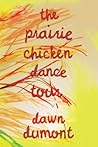
The Prairie Chicken Dance Tour The Prairie Chicken Dance Tour by Dawn Dumont
My rating: 4 of 5 stars

This is another of the book club choices for my Indigenous literatures course, so I thought I should get around to reading it, even though that particular book club is over (next year, I have even more sections).

The novel itself is based (very loosely) on the tour of a group of Indigenous dancers to Europe in the 1970s. The book is really funny. I mean, laugh aloud in the middle of a scene, funny. But it is also a sensitive character study in the multiple perspective format that is getting more and more popular among many writers, Indigenous or not. I'm trying to avoid spoilers, but the book explores what it can mean to be reconciling one's Christian faith to the realities of residential school trauma, reconciling sexual orientation as well, as well as reflections on colonialism and European attitudes to Indigenous peoples. And Dumont does this, as I noted above, with humour and honesty .

All this makes a book well worth reading, whether for school or not.

View all my reviews

Review: The Prairie Chicken Dance Tour

The Prairie Chicken Dance Tour The Prairie Chicken Dance Tour by Dawn Dumont
My rating: 4 of 5 stars

This is another of the book club choices for my Indigenous literatures course, so I thought I should get around to reading it, even though that particular book club is over (next year, I have even more sections).

The novel itself is based (very loosely) on the tour of a group of Indigenous dancers to Europe in the 1970s. The book is really funny. I mean, laugh aloud in the middle of a scene, funny. But it is also a sensitive character study in the multiple perspective format that is getting more and more popular among many writers, Indigenous or not. I'm trying to avoid spoilers, but the book explores what it can mean to be reconciling one's Christian faith to the realities of residential school trauma, reconciling sexual orientation as well, as well as reflections on colonialism and European attitudes to Indigenous peoples. And Dumont does this, as I noted above, with humour and honesty .

All this makes a book well worth reading, whether for school or not.

View all my reviews

Review: Thebes: The Forgotten City of Ancient Greece

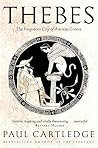
Thebes: The Forgotten City of Ancient Greece Thebes: The Forgotten City of Ancient Greece by Paul Cartledge
My rating: 4 of 5 stars

I actually got this book as a teacher gift from a student a couple of years ago. I started trying to read it in March, while on a student trip to Greece, but I have the attention span of a squirrel on these trips because there's so much more to focus on (the logistics of the trip, student well-being, student shenanigans, the interesting sites etc). So, I decided I'd try again this summer, when I had more time to myself.

The book itself is really good on a topic that is actually a little tricky, as the title suggests. One of the biggest problems about understanding the Classical Greek period is that our sources are so deeply Athenocentric, so it is difficult to understand any other cities in Greece besides Athens, and, of course, seen through an Athenian lens, her great rival, Sparta. Thebes gets distinctly short shrift, even though its influence, especially in the fourth century, was really important. It was Thebes, not Athens, which ultimately eliminated the Spartan hegemony, by effectively splitting up Spartan dominance of the Peloponnese.

Because of the problems with the sources I alluded to above, Cartledge has to pull Thebes out of established narratives, using not only history, but poetry and tragedy (with their links to mythological Thebes) to try to understand this under-considered Greek city. The approach is effective, even when he is working with fragments, as he is until around the fourth century. It does make me think that our understanding of the Greek city state is likely distorted because it relies on Athens so much. Athens achieved a greater degree of centralization as a polis earlier than most Greek cities, even her great rivals, Sparta and Thebes. Thebes' road to domination in Boeotia was uneven and, at least, in the fifth century, Thebes was merely the most powerful of the Boeotian states. Its centralization coincided with its 'hegemony' in the 360s.

This is a good monograph, although it did strike me that, at times, even while trying to avoid it, the author is still writing the history of Athens. It's hard to avoid that in the fifth century, but frustrating.

View all my reviews